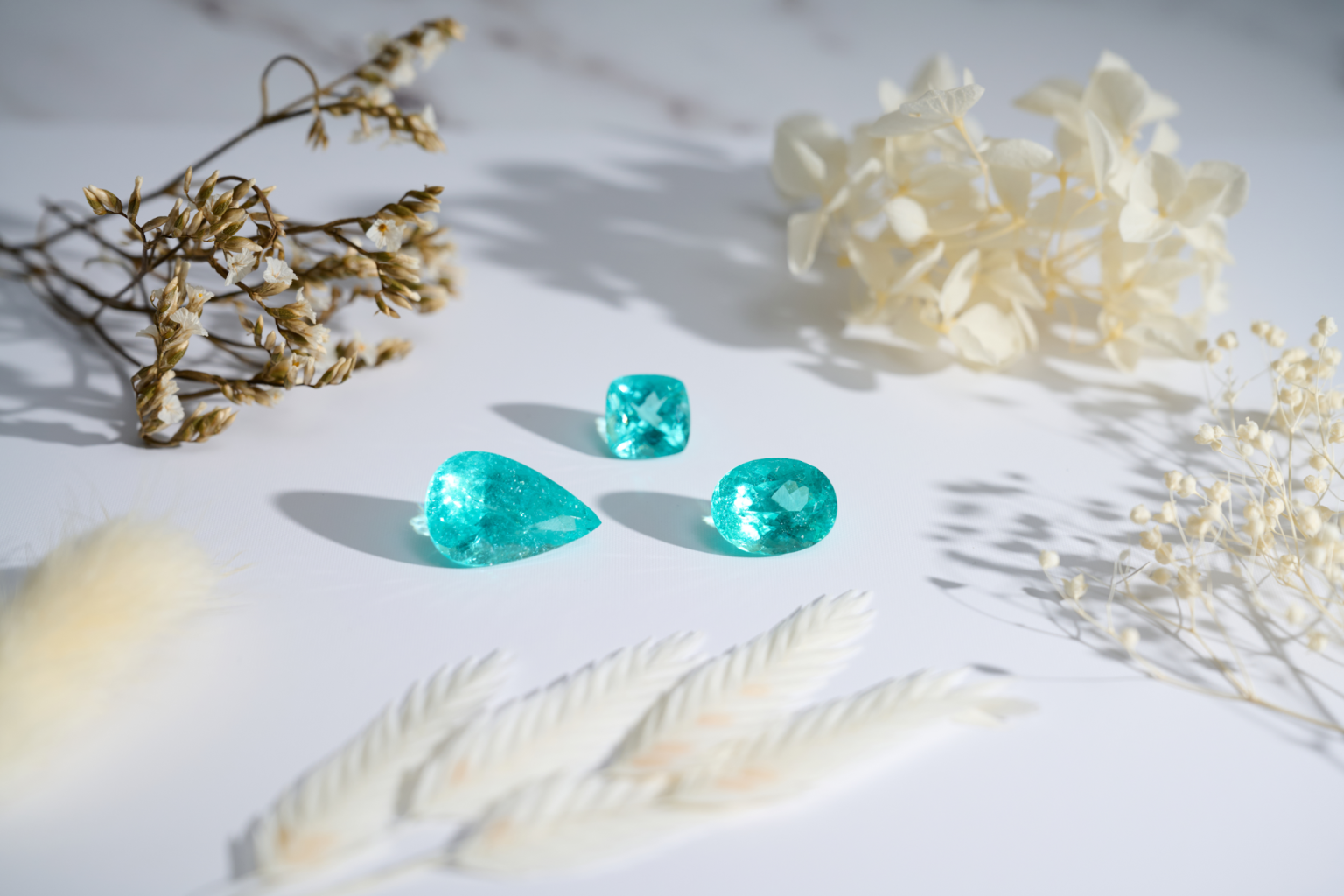
Paraiba Tourmaline is one of the most extraordinary gemstones in the world, known for its electrifying neon glow and vivid greenish-blue color. But what exactly makes it so rare and valuable?
First discovered in the late 1980s in Paraíba, Brazil, this gemstone took the world by storm. Its signature “neon” or “electric” glow comes from high concentrations of copper and manganese — a chemical combination that is extremely rare in nature. Very few gems possess such a naturally vivid color without any artificial enhancement.
Over the years, Brazilian deposits became nearly depleted, making fine material incredibly scarce. Later discoveries in Mozambique and Nigeria helped increase availability, but top-quality Paraiba — with strong saturation and bright glow — remains extremely rare.
Another factor adding to its rarity is the mining process. Paraiba Tourmaline is notoriously difficult to extract. Production is low, stones are often small, and clean specimens above 3 carats are considered exceptional. This reduces global supply and keeps prices high.
Collectors value Paraiba for its uniqueness, beauty, and investment potential. With limited mines and increasing worldwide demand, fine Paraiba stones continue to be appreciated as one of the most desirable gems in modern jewelry.
Whether set in a ring, pendant, or kept as a loose gemstone, Paraiba Tourmaline remains a symbol of rarity, luxury, and natural wonder — a gemstone like no other.